5 Signs Your Estimating Process Is Costing You Bids
Losing a tender rarely comes down to price alone. More often, it comes down to how the bid was built — and for many MENA contractors, the estimating process itself is the leak nobody’s auditing. Here are five signs your team is losing bids before the client ever says no.

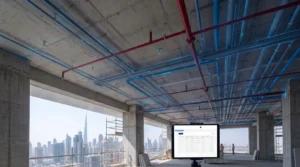
An accurate BOQ starts with quantities pulled straight from the model, not re-measured manually.
Sign 1: You Are Still Cross-Checking Quantities Manually
If your team is spending hours manually cross-checking quantities between drawings, spreadsheets, and your Bill of Quantities, you’re not estimating — you’re reconciling. Manual cross-checking is a symptom of a disconnected process, where quantities are measured once, entered again, and then verified by hand. Every hour spent manually reconciling is an hour that could be spent reviewing the bid itself. Digital takeoff tools like PlanSwift eliminate this step by generating quantities directly from the drawings, so the numbers in your BOQ are the same numbers your team measured — no manual cross-checking required.
Sign 2: Your BOQ Has a "Safety Margin" You Can't Fully Justify
Many QS teams build in a percentage-based safety margin to protect against inaccuracies — but if you can’t trace that margin back to a specific risk in the model or the design, it’s a guess, not a strategy. An unjustified safety margin either inflates your bid (making you uncompetitive) or, worse, under-protects the project (costing you margin after award). BIM-integrated takeoff gives you model-derived quantities, so your contingency can be based on the real risk profile of the project — not a standard percentage that’s carried over from bid to bid.
Sign 3: You Always Finish Just Before the Deadline
If your team is consistently submitting tenders in the final hours, the deadline is dictating the bid, not the strategy. Last-minute submissions mean there’s no time for value engineering, margin protection, or a final sanity check. More importantly, it signals a process that’s too slow to allow for proper review. Contractors who digitize takeoff and reconcile it against their BIM model routinely report cutting takeoff time by up to 70%, freeing up exactly the hours needed for the final review — the stage where bids are often won or lost.
Sign 4: You've Lost a Bid You Couldn't Explain
Losing a tender is one thing — losing a tender and not understanding why is a systemic failure. If your team can’t explain where the numbers came from, or why the bid was structured the way it was, you’re flying blind. A defensible estimate is one where every quantity is traceable back to the model or drawing it came from, and every adjustment is documented. When your team can explain the bid clearly, you learn from the loss and adjust for the next one. When you can’t, you repeat the same mistakes.
Sign 5: Every Design Revision Means Starting the Takeoff Over
If a design change forces your team to re-measure the entire drawing set from scratch, your process is fundamentally inefficient. In a well-connected estimating workflow, a design revision updates the model, and the quantities update automatically — not manually, not overnight, and not with a fresh set of errors. Tools like Sparkel read BIM models directly, so revisions don’t reset the clock. Your team spends time on the revision, not on re-measuring what’s already been measured.

What This Actually Costs You
None of these signs shows up as a line item on a P&L. They show up as tenders you didn’t win, margins that eroded after award, and senior management asking questions your estimating team can’t fully answer. Across the 800+ MENA construction leaders and 3,500+ projects GFT has supported over 20 years, the pattern is consistent: firms that digitize takeoff and reconcile it against BIM don’t just save time — they win a measurably higher share of the tenders they submit, because the bid reflects reality instead of an approximation of it.
Still measuring drawings by hand for every tender?
See how PlanSwift and Sparkel turn your BIM model into a defensible BOQ in minutes, not days.
Frequently Asked Questions
What's the biggest cause of estimation errors in construction bidding?
Manual, disconnected takeoff is the most common cause — quantities measured by hand and re-entered into a separate BOQ create multiple points where errors can enter and go uncaught before submission.
How much time can digital takeoff actually save?
Contractors moving from manual to PlanSwift-based digital takeoff have cut quantity takeoff time by up to 75% on comparable projects, freeing that time for bid review and margin protection instead.
Is AI takeoff accurate enough to replace manual checks entirely?
AI-powered takeoff tools like Sparkel are designed to generate quantities directly from BIM models, but most GCC teams still run a final QS review before submission — the tool removes the manual measurement burden, not the professional judgment.
How do I know if my estimating process is actually losing bids, not just slowing us down?
Track win rate against submission speed and revision count. If tenders submitted under time pressure or with late-stage BOQ changes have a noticeably lower win rate than others, the process — not the pricing — is likely the variable costing you bids.
External Resources
PlanSwift Official — digital takeoff software trusted by contractors to reduce takeoff time by up to 50%
Sparkel Official — AI-powered BIM takeoff software delivering instant model-based quantities
Procore Official — construction project management platform
OpenSpace Official — AI-powered reality capture and site documentation for construction
ZWCAD Official — CAD software for design and drafting professionals
PlanRadar Official — digital documentation and defect management platform
Related Topics You Might Want to Check