AI in Fire Fighting and Plumbing Engineering: 7 Practical Uses for MEP Teams in 2026
Fire fighting and plumbing systems are the quiet backbone of every building. People only notice them when something goes wrong: a sprinkler zone that fails inspection, a drainage line that hits a beam, or a BOQ that comes up thousands of fittings short. That is exactly where AI in fire fighting and plumbing is starting to make a measurable difference. From automated sprinkler layouts to clash-free pipe routing and faster quantity takeoff, AI is helping MEP engineers across the GCC and MENA deliver safer, more accurate designs in less time.
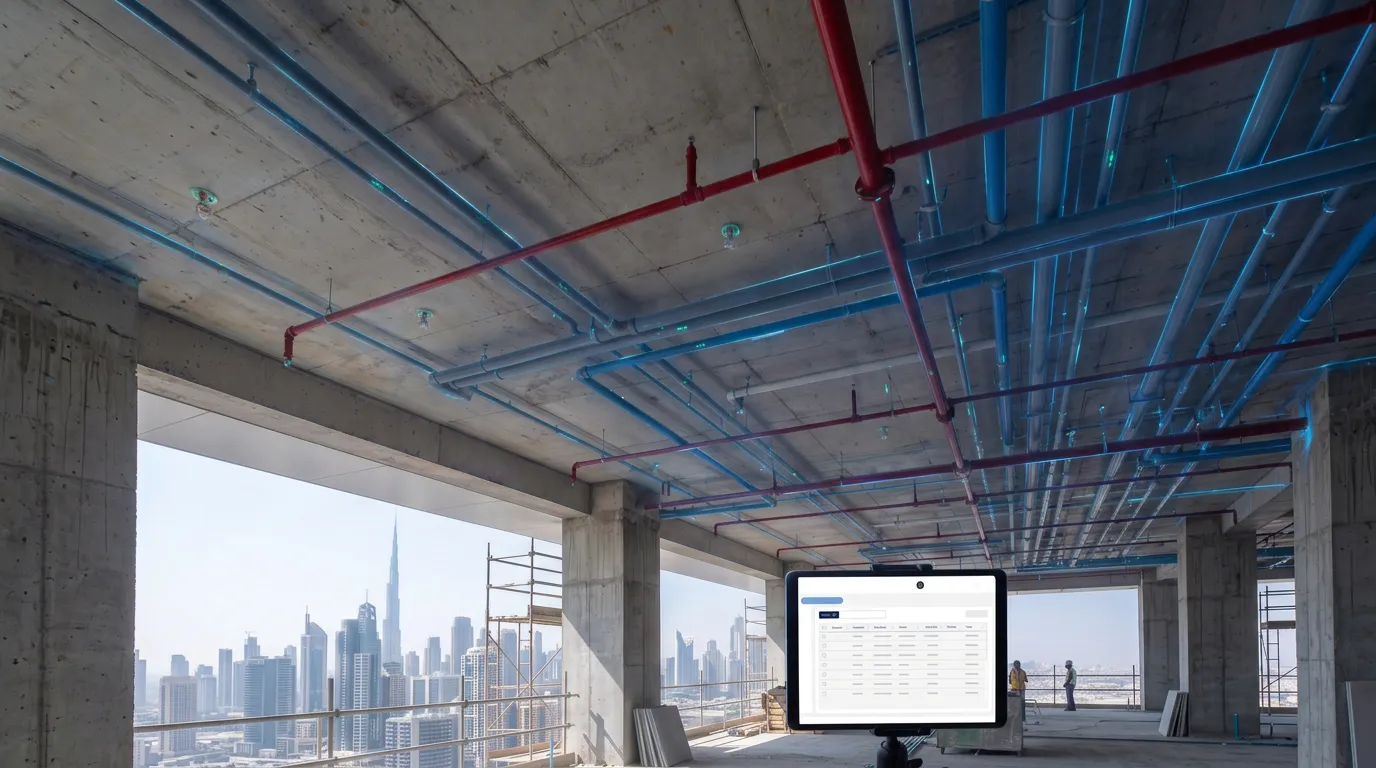
In this guide, we break down what AI in fire fighting and plumbing actually does today, where the proven results are, and how your team can start using it without disrupting live projects.
Why Do Fire Fighting and Plumbing Engineers Need AI Now?
Construction has a productivity problem, and MEP sits right in the middle of it. According to McKinsey’s research on construction productivity, global construction productivity improved by only about 10 percent between 2000 and 2022 (roughly 0.4 percent per year). The total economy improved by 50 percent and manufacturing by 90 percent over the same period. Construction also became 1 to 3 percent more expensive each year on top of general inflation.
For fire fighting and plumbing teams, that pressure shows up in very specific ways:
- Code-heavy design: every sprinkler head, hydrant, hose reel, and riser has to meet NFPA, local civil defense requirements, and client standards.
- Dense coordination: pipes compete for ceiling space with HVAC ducts, cable trays, and structure.
- High-volume counting: a single tower can contain thousands of heads, valves, hangers, and fittings that all need to appear in the BOQ.
- Tight GCC timelines: mega-projects in Saudi Arabia, the UAE, and Qatar leave little room for redesign cycles.
AI in fire fighting and plumbing does not replace the engineer’s judgment. It takes over the repetitive layers of the work so engineers can focus on performance, safety, and coordination decisions.
1. Automated Sprinkler Layout Design
Sprinkler layout is one of the most rule-based tasks in MEP design, which makes it a natural fit for AI. The engineer defines the hazard class, spacing limits, and coverage rules, then places heads room by room. The work is precise, and it is slow. For AI in fire fighting and plumbing, sprinkler layout is the clearest early win.
A peer-reviewed study published in the Journal of Infrastructure Intelligence and Resilience (Zeng et al., December 2025) trained a generative AI model on 120 real sprinkler design drawings. The results show clearly where AI in fire fighting and plumbing is heading:
| Metric | Engineer (manual) | AI model + engineer review |
|---|---|---|
| Time to prepare a layout | ~21 minutes | ~10 seconds generation + ~5 minutes review |
| Design time reduction | Baseline | ~76% faster |
| Protection coverage | 99.8% | 99.5% |
| Number of sprinklers | Baseline | ~13% fewer heads |
Source: AI-powered automatic design of fire sprinkler layout for random building floorplans
The lesson is not “let the AI design alone.” Coverage was still slightly lower than a professional engineer’s, which is why the review step matters. The real value is a strong first draft in seconds, followed by expert validation.
2. Hydraulic Calculations and Pipe Sizing
Hydraulic calculations for sprinkler systems and domestic water networks involve repeated iterations: adjust a pipe size, recalculate pressure loss, check the most remote area, and repeat. AI-assisted calculation tools can run these iterations automatically, flag the most hydraulically demanding zones, and suggest pipe sizes that meet pressure and flow requirements with less material. This is one of the least visible, but most useful, applications of AI in fire fighting and plumbing design.
For plumbing, the same logic applies to fixture unit calculations, drainage slopes, and water supply sizing. Using AI in fire fighting and plumbing calculations means fewer manual spreadsheet errors and faster design options when an architect changes the layout late in the process.
3. Clash Detection and Smart Pipe Routing
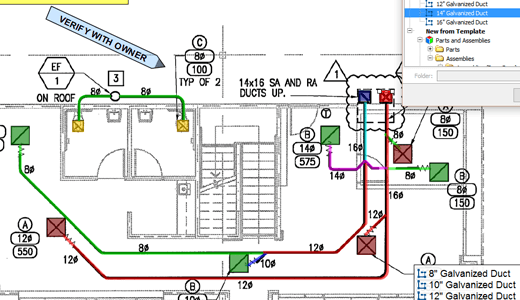
In a coordinated BIM model, fire fighting mains and drainage stacks are often the first services to clash with structure and ducts. Gravity drainage cannot simply “go around” an obstacle the way a flexible cable can.
AI-enhanced BIM coordination helps in three ways:
- Clash prioritization: grouping hundreds of clashes and ranking the ones that actually affect installation, instead of treating every 5 mm overlap as critical.
- Routing suggestions: proposing alternative pipe routes that respect slope, clearance, and access requirements.
- Rule checking: automatically verifying clearances around sprinkler heads, valve access, and maintenance zones.
This is where AI in fire fighting and plumbing connects directly to BIM/VDC workflows. GFT’s BIM services support coordinated MEP models from LOD 100 to LOD 500, so AI-driven checks run on models that are built correctly in the first place. For a deeper look at the coordination process itself, read our guide to BIM clash detection.
4. Faster, More Accurate MEP Quantity Takeoff
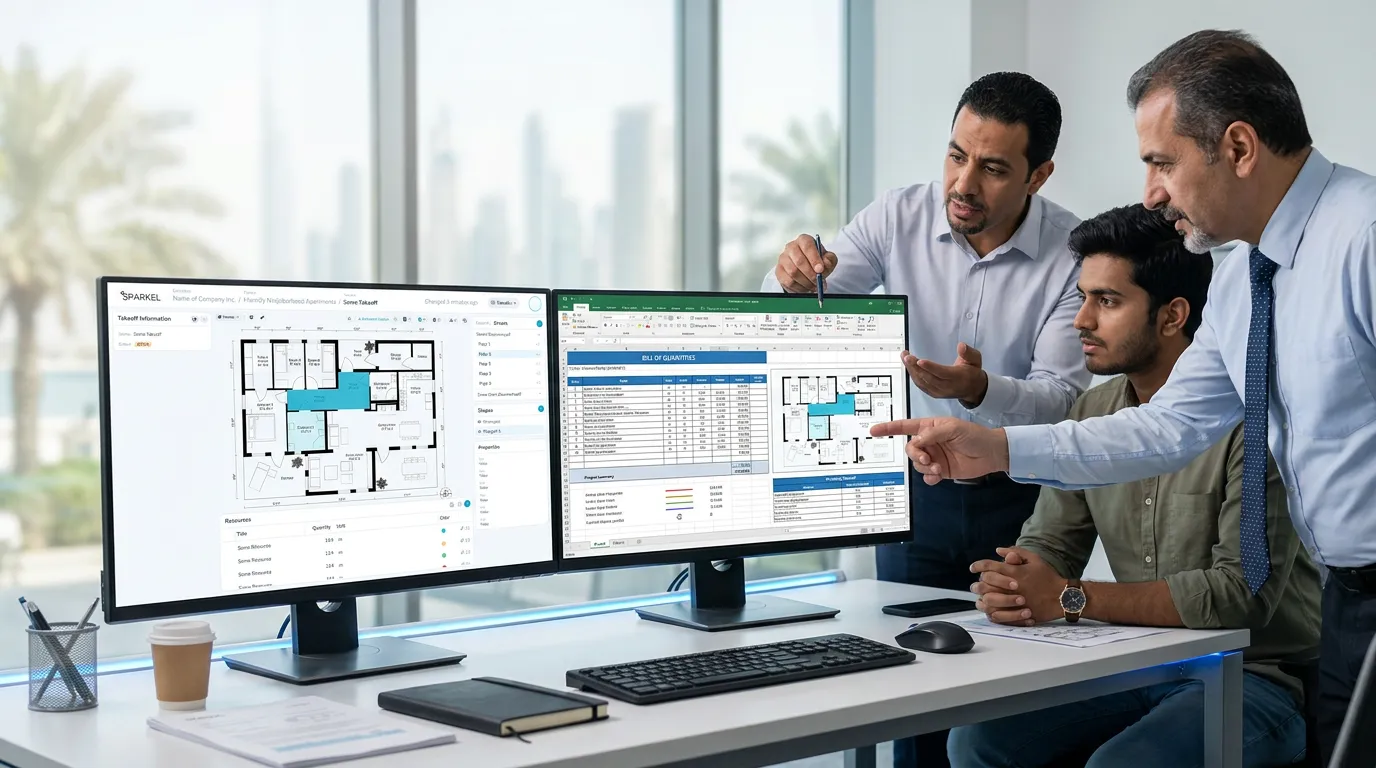
Counting sprinkler heads, measuring pipe runs by diameter, and listing every elbow, tee, and valve is one of the most time-consuming parts of an MEP tender. Small counting errors become large cost gaps once they are multiplied across floors.
Digital takeoff tools such as PlanSwift let estimators count fixtures and measure linear pipe runs directly on drawings. Its assemblies automatically add related items (hangers, fittings, insulation) to each measured length. With AI features for symbol recognition and repeated-pattern counting, AI in fire fighting and plumbing takeoff shortens tender preparation and produces BOQs your team can defend line by line. See how this works in practice in our article on AI-powered takeoff with PlanSwift.
| Task | Manual approach | Digital + AI-assisted approach |
|---|---|---|
| Counting sprinkler heads | Highlighter and tally per sheet | Automatic symbol counts per floor |
| Measuring pipe runs | Scale ruler, prone to rework | Linear takeoff by diameter and system |
| Fittings and accessories | Estimated as a percentage | Calculated through assemblies |
| Revisions | Re-measure affected sheets | Compare revisions and update quantities |
A specific GCC project figure will be added here once available.
5. Drafting and Documentation in CAD
Many fire fighting and plumbing shop drawings are still produced in 2D CAD, especially for fit-out and smaller projects. Here, AI-assisted drafting features speed up repetitive annotation, block placement, and drawing cleanup.
ZWCAD gives MEP drafters a familiar DWG-based environment with smart tools that cut repetitive steps, so teams can move from design intent to issued-for-construction drawings faster. When AI in fire fighting and plumbing design produces a layout, a reliable CAD platform is still where that layout becomes a clear, standardized drawing set.
6. Site Verification Before Ceilings Close
The most expensive plumbing and fire fighting mistakes are the ones found after the ceiling is closed. AI-powered reality capture changes that.
With OpenSpace, site teams walk the floor with a 360° camera, and the platform automatically maps the images to the floor plan. Project managers can then review above-ceiling pipework, compare it with the design, and record installed conditions before the ceiling boards go up. PlanRadar turns any issue found into a tracked defect with photos, location pins, and a named owner (see how in our digital punch list guide). Procore keeps RFIs, submittals, and inspection records connected to the wider project.
This is AI in fire fighting and plumbing moving beyond the design office and into quality control on site.
7. Predictive Maintenance and Smart Building Operation
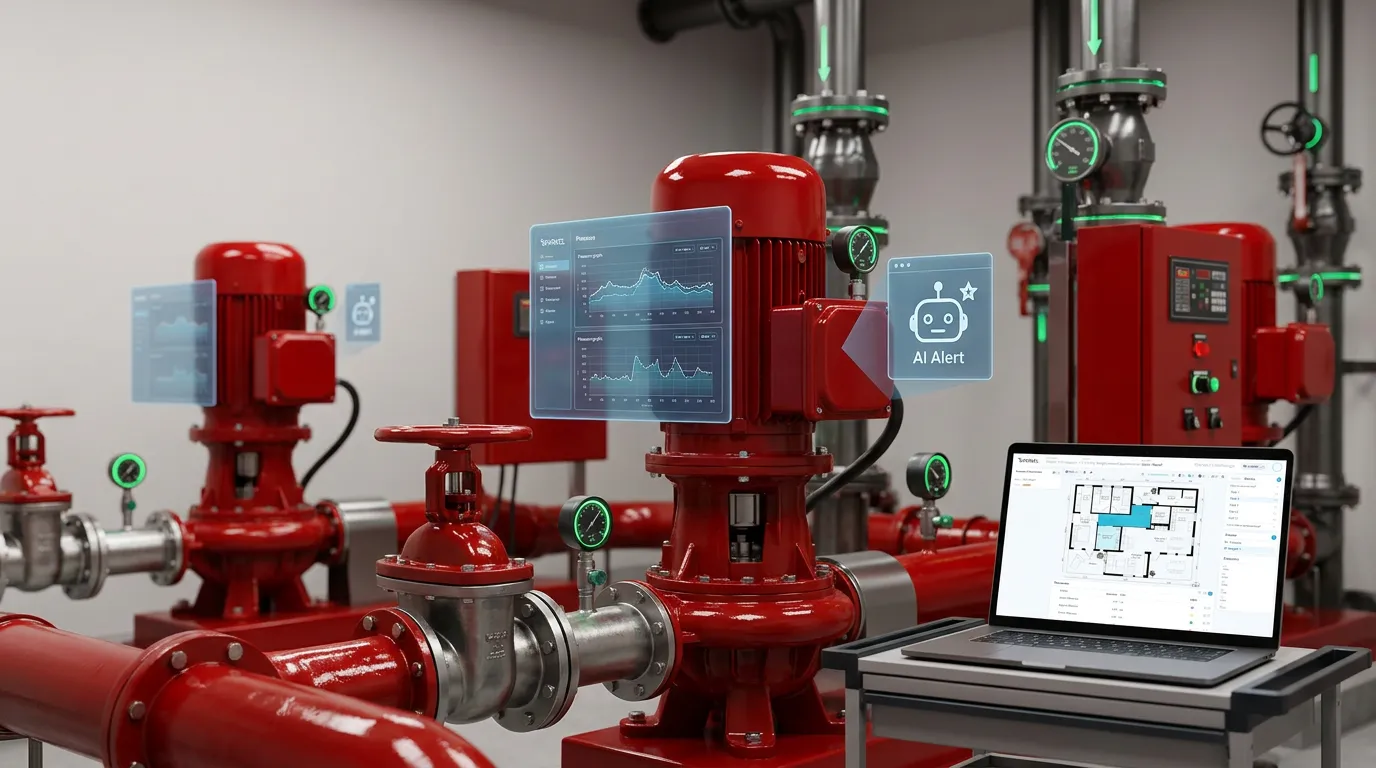
AI does not stop at handover. Connected fire pumps, pressure sensors, and smart water meters produce data that AI models can analyze to spot unusual pressure drops, declining pump performance, or hidden leaks. For facility managers, this means moving from scheduled maintenance to condition-based maintenance, and catching problems before a fire system fails a test or a leak damages finishes.
Designing with this in mind (sensor locations, accessible valves, clean asset data in the BIM model) is part of what makes AI in fire fighting and plumbing valuable across the full building lifecycle.
What Are the Limits of AI in Fire Fighting and Plumbing?
A confident adoption plan is also an honest one. Before rolling out AI in fire fighting and plumbing across your team, keep these limits in mind:
- Code compliance stays with the engineer. AI outputs must be reviewed against NFPA and local civil defense requirements before submission.
- Data quality matters. AI trained on inconsistent drawings produces inconsistent results. Clean templates and standards come first.
- Local rules vary. Requirements in Saudi Arabia, the UAE, Egypt, and Qatar are not identical, so tools must be configured for each authority.
- Skills multiply the value. Teams that understand both the engineering and the software get far more out of it than teams that only buy licenses.
How to Start Using AI in Your MEP Workflow
You do not need to adopt AI in fire fighting and plumbing all at once. A practical roadmap looks like this:
- Digitize takeoff first: move fire fighting and plumbing quantities into a digital takeoff tool to create fast, auditable BOQs.
- Standardize your CAD and BIM templates: consistent layers, blocks, and families are the foundation every AI tool depends on.
- Add BIM coordination with rule-based checks: catch clashes and clearance issues before they reach site.
- Capture site progress visually: verify above-ceiling installations before closure.
- Train your team: build internal champions who can review AI outputs with engineering judgment.
Looking for the wider picture across HVAC and electrical systems as well? Read our overview of AI in MEP engineering, which complements this guide to AI in fire fighting and plumbing.
Build Smarter Fire Fighting and Plumbing Systems with GFT
GFT brings 20+ years in the MENA construction market, 800+ industry leaders empowered, and 3,500+ projects supported. We help MEP teams turn AI from a buzzword into measurable results. We support the full workflow: PlanSwift for accurate MEP takeoff, ZWCAD for efficient drafting, BIM/VDC coordination, OpenSpace, PlanRadar, and Procore on site, and hands-on training for your engineers.
Ready to bring AI into your fire fighting and plumbing workflow? Book a free consultation with GFT’s experts today.
Frequently Asked Questions
What is AI in fire fighting and plumbing engineering?
It is the use of artificial intelligence to automate and improve tasks such as sprinkler layout, hydraulic calculations, pipe routing, clash detection, quantity takeoff, site verification, and predictive maintenance for fire protection and plumbing systems.
Can AI design a sprinkler system on its own?
Not yet in a code-compliant, submission-ready way. Research shows AI can generate a sprinkler layout in seconds with around 99.5% coverage, but a qualified engineer must still review and approve the design against NFPA and local civil defense requirements.
How does AI help with MEP quantity takeoff?
AI-assisted and digital takeoff tools count symbols such as sprinkler heads and fixtures, measure pipe runs by diameter, and calculate fittings through assemblies. This is one of the fastest payoffs of AI in fire fighting and plumbing: fewer counting errors and faster BOQ preparation for tenders.
Is AI in fire fighting and plumbing suitable for GCC projects?
Yes, as long as tools and templates are configured for the local authority requirements in each country. GCC mega-projects, with tight schedules and dense MEP systems, benefit strongly from automated coordination and takeoff.
Where should an MEP company start with AI?
Start with digital quantity takeoff and standardized CAD/BIM templates, then add BIM coordination, site reality capture, and team training. This builds clean data first, which every AI tool relies on.
Related Topics You Might Want to Check